Making Experimental Art: A Guide for the Perplexed (Pt. 4)

The fact that experimental art calcifies into sameness should not come as a surprise, since it is the general trend of art in general since the enlightenment. Ever since art and utility became separated and art for the sake of art became the norm, it has gained a magical quality that separates it from its processes and the experience of the people who create it. the American philosopher John Dewey, in his 1934 book Art as Experience, puts it better than I ever could when he writes, “When artistic objects are separated from both conditions of origin and operation in experience, a wall is built around them that renders almost opaque their general significance, with which esthetic theory deals. Art is remitted to a separate realm, where it is cut off from that association with the materials and aims of every other form of human effort, undergoing, and achievement.”

Put another way, when a piece of art is put into a museum, a poet made national laureate, or a piece of literature is taught in high-school English, it becomes a holy relic that we either reverie or despise because we sense it may not actually be a piece of the true cross. And, like many relics, true origin matters very little. Its presence in the church has made it holy.

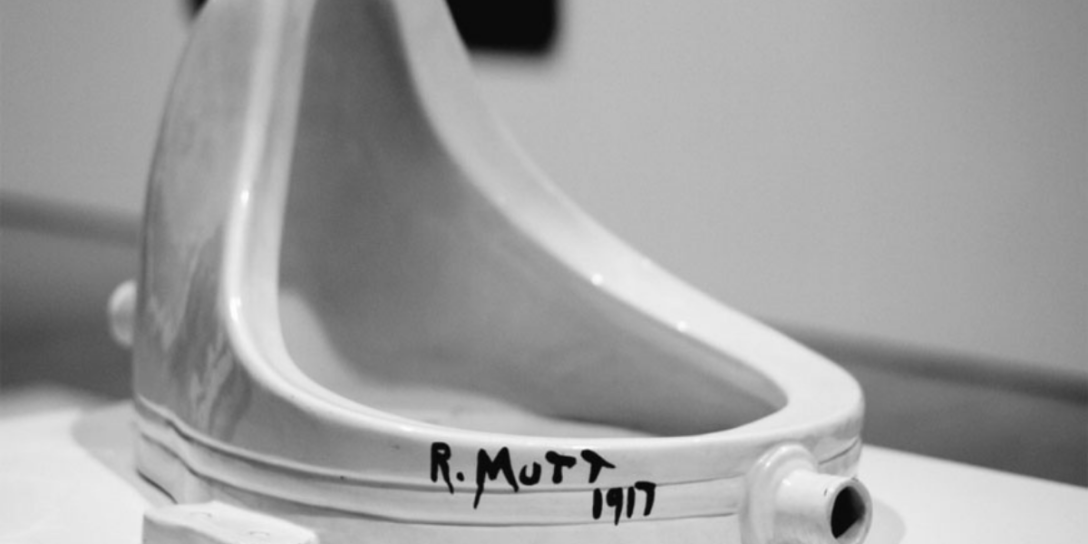
New forms of experimental art often represent an attempt to escape this artistic canonization, while containing within them the seeds of their own failure. Take, for example, Marcel Duchamp’s Fountain, where the artist famously submitted a urinal signed “R. Mutt” for display at the inaugural exhibition of the society of independent artists in 1917. The piece intentionally subverted the idea of fine art, both degrading the stuffy gallery culture of the time and elevating everyday objects. Art, Duchamp asserted, is what we perceive as art. It is defined by its arbitrary presence in a building designed for art.

Instead of deconstructing the museum, however, Duchamp only added to what museums would consider displaying. The museum itself canonized the radical gesture of diverting from gallery culture, making it just as inaccessible to everyday people as any rare Rembrandt, perhaps more so, since to understand Fountain, a person needs to be well versed in the artistic climate of the early 1900’s. That which a person cannot understand, but which is held in esteem by experts, increases its mystery and therefore its status as art. We begin to identify art as something defined by its lack of comprehensibility. By protesting arts elevated place, Duchamp contributed to art’s continued elevation.

By slow degrees, experimental art as a genre became, at least in the eyes of experimental artists, the holy of holy’s, not just the fingerbone of a hallowed saint, but the saint himself, reclothed in flesh and handing out miracles. It separated itself even farther from a thing which, by its very nature, already seems separate. Caught in its own self-referential cycle, it forgets where it comes from entirely, its raison de entre to perpetuate its own inscrutable position. The only way to free experimental art from its self-imposed exile is to remind its makers that, as Dewey writes, “Mountain peaks do not float unsupported; they do not even just rest upon the earth. They are the earth, in one of its manifest operations.”
Making Experimental Art: A Guide for the Perplexed (Pt.3)

Often, though, experimental artists forget the process. They seek to create art that shocks or impacts their audience, using the tools of experimental artists who came before. But they aren’t actually generating any of these tools. The experiment is gone, replaced by the afterimages of experiments past, endlessly repeated.   

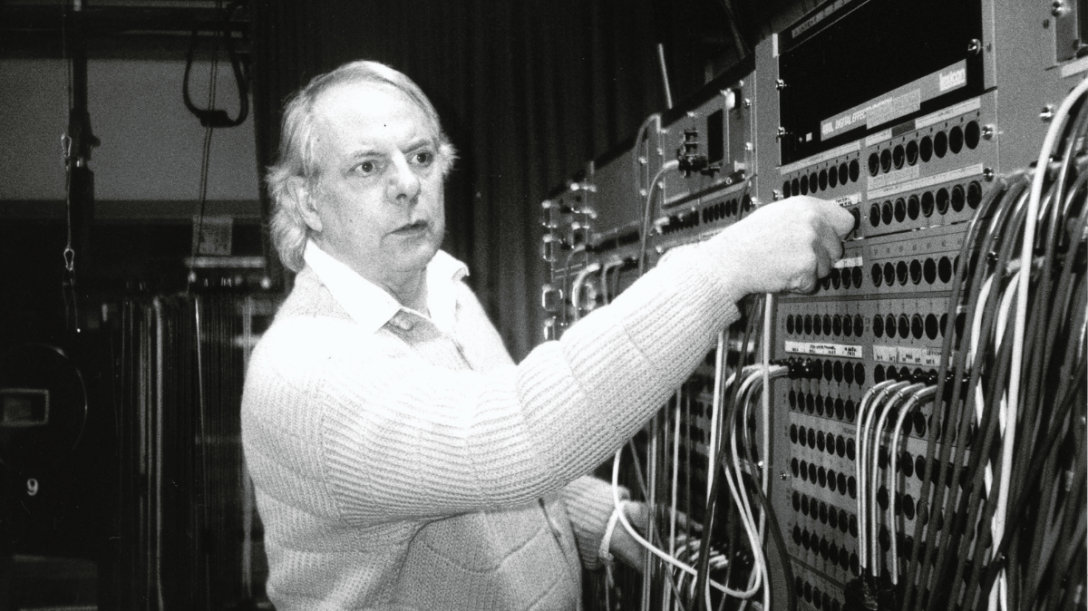
Does this make these pseudo-experiments bad? Not necessarily. Some of the most well-done productions I’ve seen skirt the line between process-based experimentation and just being a cool interpretation of a play. Experimentation does not equal quality, and quality does not equal experimentation. And even if an experiment is well done, that doesn’t mean people will, or should, like it. Edinburgh based avant-garde metal band Thy Catafalaque puts out some of the most interesting and challenging music I can think of, but they’re no Karlheinz Stockhausen, whose musical theories included notions like statistical composition, and polyvalent fields. Stockhausen’s music bleeds complexity, but half the time all this means is that you’re listening to complex noise. Thy Catafalaque still retains a human quality that makes it listenable, while Stockhausen, objectively more experimental, just doesn’t.  

Experimentation takes a very long time, and there’s not a whole lot of return on your investment. Just because you’re experimenting doesn’t mean that your work will galvanize the artistic world. You also have to have talent, dedication, and more than a bit of luck to do that. You might just make something bad that no one cares about. Relying entirely on process can make you soar, but just as often it will leave you with your face in the dirt, wondering how and why you got there.  An artist has every reason not to make that leap. 

But often the experimental label makes an artist or piece self-important in a way that it doesn’t merit. Art that results from experimentation falls prey to this too. Being an experimental artist has somehow come to mean that that you are ever so serious and important, charging your work with a pretentiousness that ruins any legitimate creativity. But by accepting the experiment as a genre rather than a process, experimental art work ends up becoming the artistic equivalent of your sister’s goth phase in middle school, constantly trying to appear darker and more extreme, when really, she’s just having a hard time fitting in, and can’t deal with your mom’s new boyfriend. Subconsciously aware that it has not affected the revolution in human thought as it has promised since the 19th century, experimental artists use the same tools that worked fifty years ago, but uses them harder, in an artistic temper-tantrum that convinces no one, but comforts the user into believing that they, alone, are doing something radical. 

Don’t get me wrong, experimentation is extremely important, capturing the spirit of the age in its roundabout processes better than any documentary. But it still comes from the same place as any other artwork: human experience. A poet like Robert Frost, who uses traditional metrical devices and rhyme schemes, attempts to express the same humanity as Nathaniel Mackey, who shapes language and meter to the service of his work’s musicality. Experience and humanity actually drive innovation, are the chaotic factors that give art the spark of life. When the genre of experimental art forgets this, it paints itself into a corner. The past’s innovations calcify into axiom. Afraid that letting in any sense of life will open them to criticisms of being realists, they effectively create artistic corpses, beautiful to look at, but with no movement in them. 

Making Experimental Art: A Guide for the Perplexed (Pt. 2)

Most people know how a scientific experiment works: you have a thesis, or initial question, create a controlled scenario where you can test that thesis, and through testing, you can come up with a tentative answer to the question you are asking. The answer is important, but if you don’t set up the test right, then the answer doesn’t mean anything.  

This isn’t all that different from artistic experimentation. The experimental spirit is one of creative investigation. Like a scientific experiment, an artistic one requires a set of ground rules or questions, what you might call the work’s thesis. The process of creating a work is the testing of this thesis, and the results the, well, the results. The thesis might be a little bit broader than a scientific one (what would it look like if we devised this show using each cast-member’s interpretation of the word “joy”), and it might not necessarily be conscious. But every creator who is experimenting enters into the work with a spirit of discovery.

The Dead White Zombies’ 2018 production of Holy Bone in South Dallas is probably the clearest example of this creative spirit I can think of. Intending to create an interactive piece, members of the company went to public spaces where they recorded people’s reactions to a series of questions. They then refined the questions and identified different species of response. In this way they were able to figure out how audience members would react to different scenarios, and build scenes out of it. If you want a definition of an experiment, you can’t get much closer than that: asking questions until those questions transform into art.  

But the real spark that turned Holy Bone into a production I still think about three years later was an accident. The Zombies wanted to perform in an abandoned factory in South Dallas, but the fire marshal said they couldn’t have more than ten people in the space at once. The artistic director, Thomas Riccio, realized that, while they couldn’t put a bunch of people in one space, they could take a small amount of people through a series of different spaces. According to D Magazine:  

Riccio started to think about creating a piece of theater that didn’t necessarily take place in any particular space, but rather used the entire city as its theater, expanding the definition of a theatrical production so broadly that the Zombies could claim any space in which to perform.

The result was something that I find difficult to describe except with academic labels like “immersive”, “processual”, or “ritualistic,” that are ultimately inadequate. Through accident and deliberate experimentation, the Zombies created an experience akin to an individualized spiritual journey, where I wandered through an unfamiliar neighborhood with only a loose idea of where I was supposed to go. Intermingled with people drinking beers out on their porch or walking their dog in the humid night was a shaman who offered to help me understand what I needed to give up to move forward in my life. The woman who cast my fortune as I entered into one abandoned home was just as much a part of the scenery as the folks in the taco stand we all gathered at afterward. I lost myself time and again, but being lost was just part of the journey. For a few hours that evening, the zombies convinced me that spirits were real, and communion with them as practical as breathing.

Now, the Zombies are an experimental theatre company. Riccio once told me that he chose the name Dead White Zombies so that they would never do anything normal. But for me, Holy Bone transcended the dichotomy of normal and not normal. It simply was what it was, a fully realized entity that did not strive for pretense. Holy Bone was experimental, yes. But its experimental aspect came from a “how”, a manner of doing, not from its resemblance to other experimental artwork.